


Lil Durk Broke Down Crying in a Los Angeles Courtroom Friday - A Federal Jury Just Acquitted Him of Everything
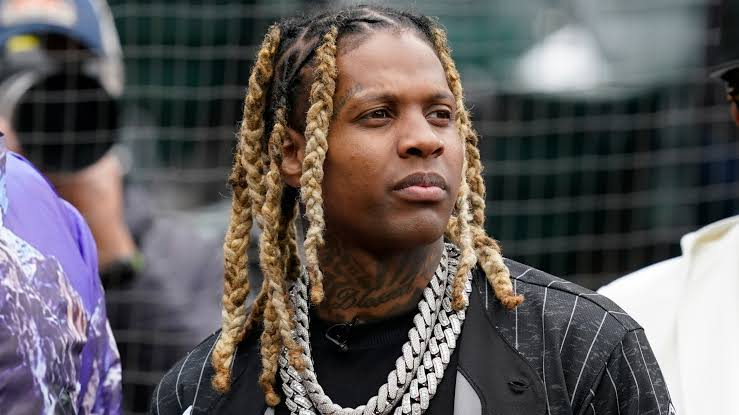
There is a very specific image that will likely define how this entire saga gets remembered - a 33-year-old Grammy-winning artist, head down, shoulders shaking, being steadied by his own attorney as a federal jury foreperson read the word "not guilty" four separate times in a downtown Los Angeles courtroom. Behind him, his wife India Royale wrapped her arm around his mother. Two years of federal custody, a murder-for-hire indictment carrying a possible life sentence, and a trial that had drawn Machine Gun Kelly and Ye into the courtroom gallery, all collapsed into that single moment on Friday.
A federal jury found Lil Durk - legal name Durk Banks - not guilty on all counts: conspiracy, stalking resulting in death, and murder for hire. After three weeks of testimony and three full days of deliberation, the government's case against one of hip-hop's most commercially significant artists of the last decade simply did not hold.
What the Government Actually Alleged
To understand the weight of Friday's verdict, you have to understand exactly what prosecutors spent three years building a case around. The story traces back to November 2020, when Dayvon "King Von" Bennett - Durk's close friend, protégé, and a foundational member of his Only The Family collective - was fatally shot outside a nightclub in Atlanta. Prosecutors alleged that someone connected to rival rapper Quando Rondo's entourage was responsible, and that Durk spent the following two years plotting revenge.
That alleged plot culminated in June 2022, when three gunmen opened fire at a vehicle near Los Angeles's Beverly Center, firing eighteen rounds at a car carrying Quando Rondo - born Tyquian Bowman - and his cousin, Saviay'a Robinson. Rondo survived. Robinson did not. Prosecutors argued Durk had personally financed, planned, and directed the entire operation, using his wealth and influence to put what one Assistant U.S. Attorney described in court as a bounty on his rival's life.
The government's case rested almost entirely on the testimony of three cooperating witnesses - Kacey Hester, known professionally as OTF Jam, alongside Keith Jones and Durk's own former personal assistant, Kavon Grant. All three had their own legal exposure tied to the case, and Durk's defense team spent much of the trial working to dismantle their credibility in front of the jury.
How the Defense Actually Won This
Durk's legal team - led by Drew Findling and Brian Steel, two attorneys with significant experience defending high-profile hip-hop clients through complex federal cases - built their defense almost entirely around a single, direct argument: that the government's entire case depended on the word of people with every incentive to lie.
Steel characterized the cooperating witnesses bluntly in front of the jury, describing them as unreliable figures hoping for reduced sentences of their own. Findling went further, specifically targeting Kavon Grant's credibility, arguing the former assistant had manipulated not just the case against Durk but the investigators themselves - the FBI, the LAPD, and ultimately the prosecutors who built their case around his account.
That strategy worked. A jury spending three full days weighing testimony from cooperating witnesses against the actual physical evidence connecting Durk directly to the shooting ultimately found the government had not met its burden. It is worth noting precisely how split that outcome actually was. Durk's two co-defendants, Deandre Wilson and David Lindsey, were not fully cleared - the same jury convicted both men on conspiracy to commit stalking, stalking using a dangerous weapon, and stalking resulting in death, while acquitting them of the murder-for-hire charge specifically. That distinction matters. The jury clearly believed a stalking and retaliation campaign against Quando Rondo existed. What they did not believe, at least not beyond a reasonable doubt, was that Durk himself had ordered a killing.
The Scene Outside the Courthouse
While the jury deliberated across those three days, downtown Los Angeles had effectively turned into a live, ongoing media event of its own. Large crowds of fans, independent livestreamers, and content creators gathered outside the federal courthouse throughout the trial, treating the proceedings with the same real-time, constantly updating attention usually reserved for major sporting events or awards shows. That dynamic reflects something genuinely unusual about how this specific case unfolded across its full lifespan - not just as a legal proceeding, but as a sustained, global cultural moment.
That global dimension was not confined to Los Angeles. Weeks before the verdict, hundreds of Durk's fans marched through the streets of Kumasi, Ghana, wearing Only The Family merchandise and chanting for his freedom - a spontaneous demonstration organized entirely by fans whose connection to his music had crossed an ocean through nothing more than streaming platforms. Friday's celebration outside the Los Angeles courthouse was, in some sense, the domestic continuation of exactly that same sustained, borderless support.
Inside the gallery itself, Durk's presence drew figures from well outside his own immediate circle. Machine Gun Kelly and Ye both appeared in the courtroom audience at points during the trial, a visible show of solidarity from two artists whose own careers have, at different points, intersected with very public legal and personal struggles of their own.
The Emotional Weight in the Room
What has struck nearly every outlet covering Friday's verdict is not simply the legal outcome, but the raw, visible emotion that followed it. Durk reportedly hung his head and began crying as the not-guilty verdicts were read one after another, with attorney Christy O'Connor linking arms with him to help steady him through the moment.
His father, Banks Sr., who attended every single day of the trial, offered a response afterward that carried a genuinely difficult, layered honesty rather than pure triumph. He spoke directly about the Robinson family's loss, acknowledging his own experience of losing a son and extending real sympathy toward a family that, regardless of Friday's verdict, is still mourning someone who never made it out of that car near the Beverly Center. That specific note - grief acknowledged directly alongside legal vindication - is worth sitting with, because it reflects something the verdict itself cannot resolve. A young woman is still dead. A jury simply determined, based on the evidence presented, that the man on trial was not the person who ordered her death.
Why This Is Not Actually Over
Here is the detail that keeps Friday's verdict from functioning as a clean, final resolution to Durk's legal situation. Despite being acquitted on all charges in this specific trial, he remains in federal custody. He has been held without release since his October 2024 arrest, and a separate federal racketeering case - one that includes murder and firearms counts, severed from this particular trial - is scheduled to proceed to trial on October 5.
That second case carries its own significant weight and its own separate legal exposure. Friday's acquittal closes one specific, highly publicized chapter of Durk's legal saga, but it does not free him, and it does not end the broader legal jeopardy he continues to face. His attorney Drew Findling, speaking to reporters outside the courthouse after the verdict, described the outcome in genuinely historic terms - framing it as a defining moment for both his client and his own career representing him. That framing may prove premature, or at least incomplete, depending entirely on how the October racketeering trial unfolds.
What This Verdict Says Beyond One Case
There is a broader context worth naming here, because this case has never existed purely as an isolated legal matter separate from hip-hop's ongoing relationship with the justice system. It arrived in the same year as the long-delayed Tupac Shakur murder trial finally reaching a Las Vegas courtroom, and inside a broader, ongoing national debate about how prosecutors use rap lyrics, associates' cooperation, and cultural context as evidence against artists specifically.
Friday's verdict will likely be read differently depending on who is doing the reading. For Durk's fans - in Chicago, in Los Angeles, and visibly in Ghana - it will be treated as vindication, proof that a prosecution built substantially on the testimony of self-interested cooperating witnesses could not withstand real scrutiny in front of an actual jury. For prosecutors and for Saviay'a Robinson's family, it will likely register as a genuinely painful outcome, a case that produced convictions against two other men but failed to hold the person the government identified as the operation's architect accountable in the way they had argued for.
Both of those readings can be true simultaneously, and neither erases the other. What is certain is that Lil Durk walked out of one federal courtroom Friday having cleared the single most serious legal threat of his career - and walks directly toward another one, with October 5 now standing as the next date that will determine whether this story is actually finished, or simply entering its next chapter.
Key Facts
A federal jury acquitted Lil Durk (Durk Banks, 33) on all charges - conspiracy, stalking resulting in death, and murder for hire - on Friday, September 11, 2026.
The case centered on a June 2022 shooting near Los Angeles's Beverly Center that killed Saviay'a Robinson, cousin of rival rapper Quando Rondo.
Prosecutors alleged Durk orchestrated the shooting in retaliation for the 2020 killing of his close friend and Only The Family collaborator, King Von.
Co-defendants Deandre Wilson and David Lindsey were convicted of stalking-related charges but acquitted of murder-for-hire.
The prosecution's case relied heavily on three cooperating witnesses, whose credibility Durk's defense team, led by Drew Findling and Brian Steel, successfully challenged.
Durk remains in federal custody. A separate racketeering trial, including murder and firearms charges, is scheduled for October 5, 2026.
Machine Gun Kelly and Ye were among the public figures who appeared in the courtroom gallery during the trial.
Durk won a Grammy in 2024 for "All My Life," featuring J. Cole.
References
AP via US News - Rapper Lil Durk Acquitted of Murder-For-Hire at Los Angeles Trial
Rolling Stone - Lil Durk Acquitted of All Charges at Murder-for-Hire Trial
CNN - Lil Durk: Rapper Acquitted of Murder-for-Hire at Los Angeles Trial
ABC7 Los Angeles - Lil Durk Verdict: Federal Jury Finds Rapper Not Guilty
NBC Los Angeles - Jury Arrives at Verdict in Lil Durk Murder-for-Hire Trial
Written by Mppress


Comments